THE CHEMISTRY
Heat the rock, release the gas
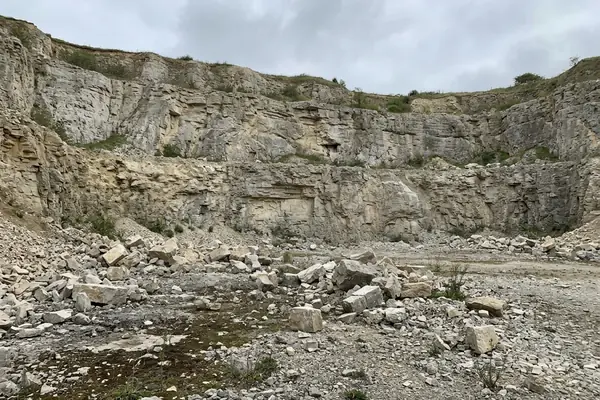
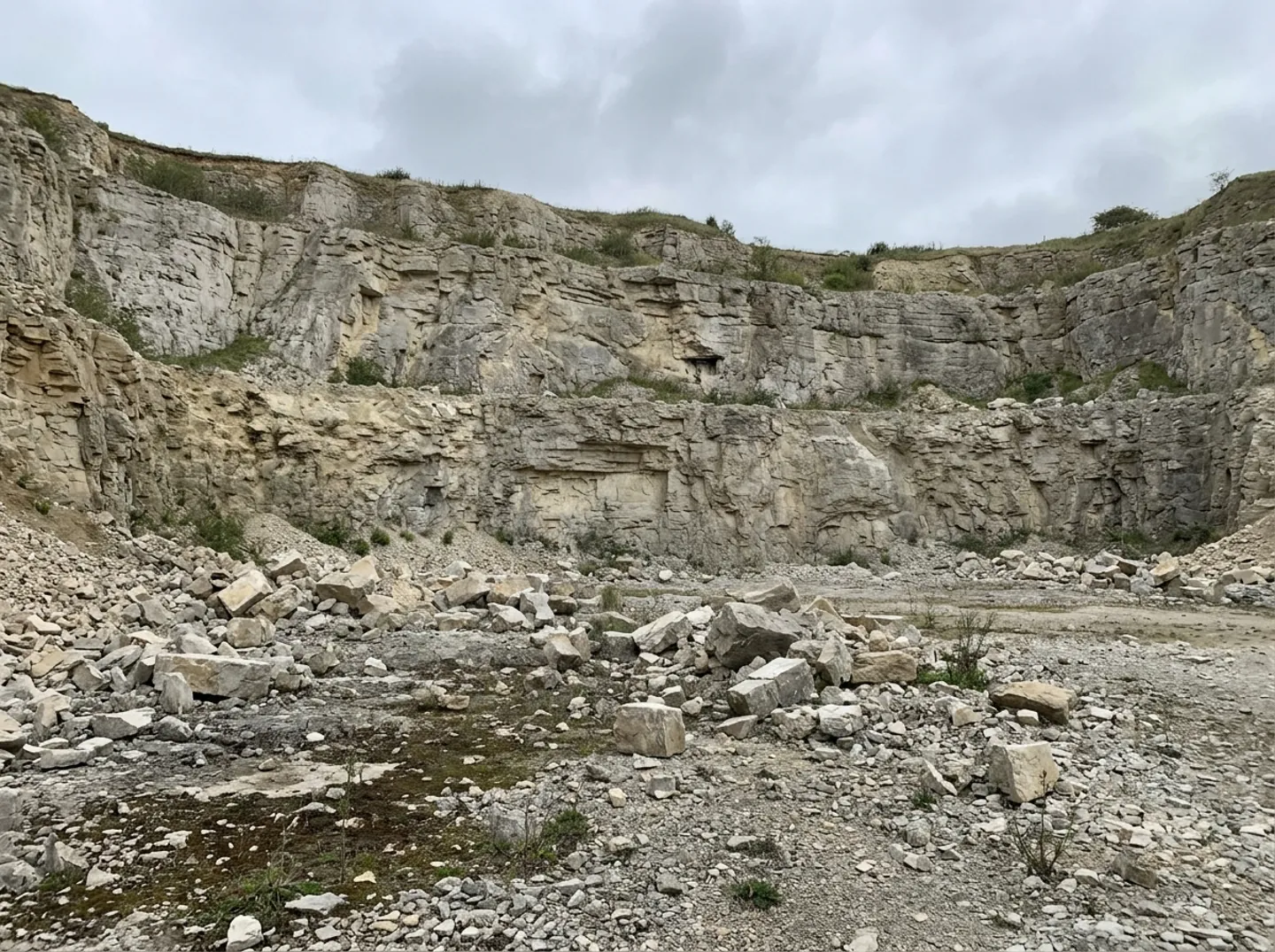
Cement starts as limestone heated to about 1,450°C. As it heats, CO2 separates from the stone. This step, calcination, causes around half of the industry's emissions.
Trace the CO2 doodleconstructs
WHAT THE EVIDENCE SAYS
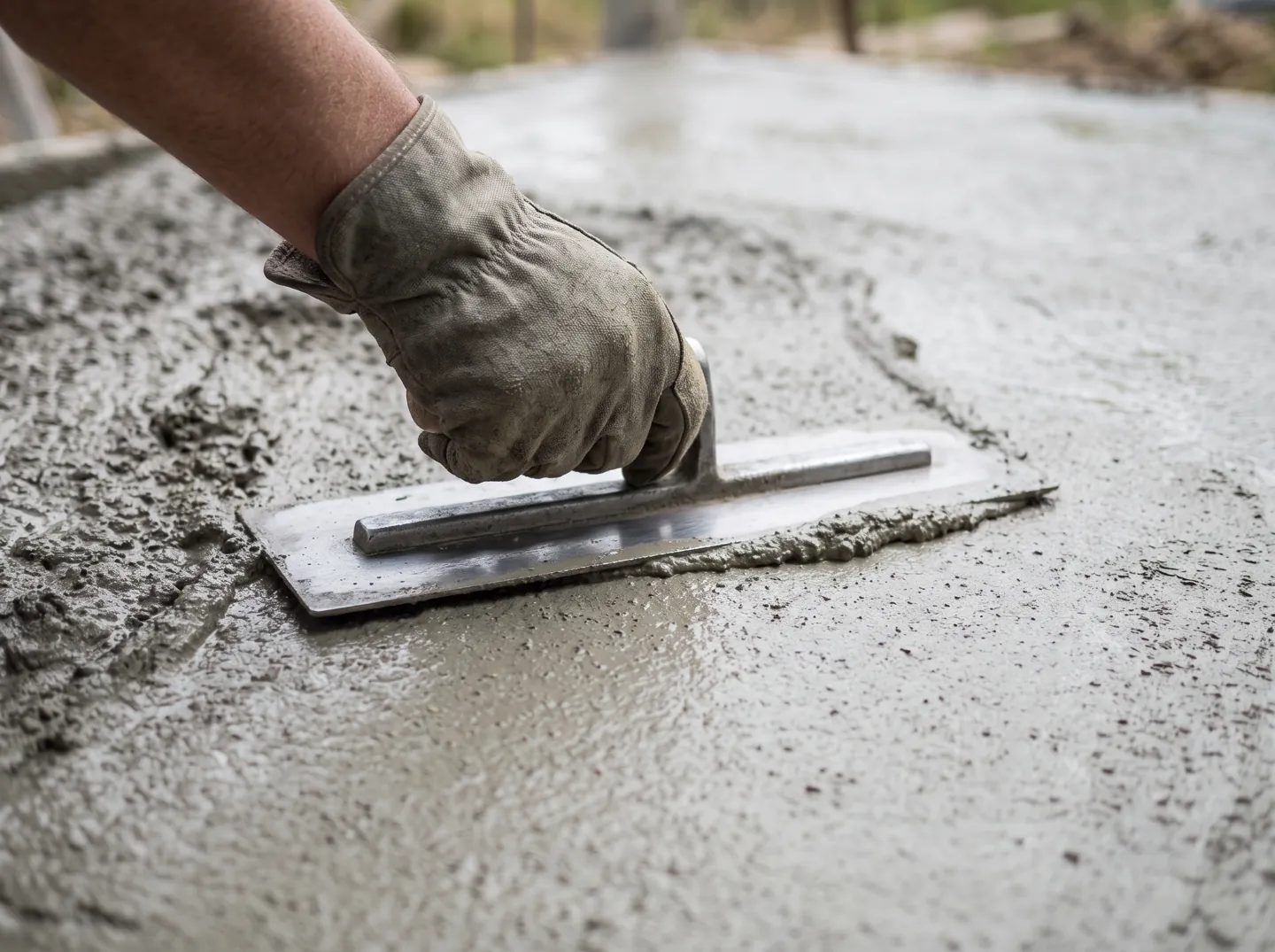
Concrete is mostly stone, sand and water.
Trace the CO2
650 kgCO2 per tonne of UK cement
The small share of cement that binds it together carries most of the carbon. About half comes not from fuel but from the limestone itself, which gives up CO2 when it is heated in the kiln.
Updated
THE SHORT ANSWER
Cement is the glue in concrete.
It is also where the emissions are.
THE CHEMISTRY
Cement starts as limestone heated to about 1,450°C. As it heats, CO2 separates from the stone. This step, calcination, causes around half of the industry's emissions.
Trace the CO2THE MIX
Cement makes up about 10 to 15% of a typical concrete mix but holds most of its embodied carbon. Locally sourced aggregate is about 4 kg of CO2 a tonne.
See the numbersTHE FIXES
Structural engineers suggest allowing additions such as slag, fly ash or limestone in place of some Portland cement, using the right strength and not over-specifying.
What engineers suggestTRACE THE CO2
Pick a part of the process to see how much of the carbon it accounts for. The bar shows its share.
Shares from Green Alliance's 2025 briefing on the UK cement industry and IStructE guidance on lower-carbon concrete. Industry statistics suggest calcination could be up to 70%.
TWO NUMBERS WORTH KNOWING
One UK figure per tonne,
one global figure for the chemistry alone.
≈ 650 kg
Average CO2 per tonne of cement made
UK plants ranged from 530 to 770 kg of CO2 per tonne of cement in 2023, depending on materials, machines and fuels. Cement making was 1.5% of all UK emissions in 2022.
UK CEMENT · 2023
≈ 4%
Calcination emissions vs fossil fuel emissions
A 2019 study put global process emissions from cement at 1.50 billion tonnes of CO2 in 2018, about 4% of emissions from fossil fuels, and 71% of the total since 1928 came after 1990.
GLOBAL PROCESS CO2 · 2018
Green Alliance reports that the emissions intensity of UK cement fell by only 1.2% from 2012 to 2023, citing the Mineral Products Association.
WHAT ENGINEERS SUGGEST
These are the Institution of Structural Engineers' tips for people who specify concrete. On a home project, they are questions worth asking your engineer or builder.
Cements that replace some Portland cement (CEM I) with slag, fly ash, limestone or pozzolana have a much lower embodied carbon.
Stronger concrete needs more cement. Specify what the job needs, not more.
Concretes with more additions gain strength more slowly. For foundations, engineers may specify strength at 56 or 90 days instead of 28.
Green Alliance says construction often specifies 25 to 50% more material than needed. Efficient design uses less concrete.
THE CATCHES
Slag and fly ash are by-products of traditional steelmaking and coal power, both declining in the UK. A 2023 review in The Structural Engineer found slag has been used to its maximum for two decades, so specifying it saves carbon on one project but not nationally.
Carbon capture and storage could tackle both calcination and fuel emissions, but Green Alliance says it is unlikely at scale in cement before 2030. One proposed scheme, the Peak Cluster in Derbyshire and Staffordshire, aims to be operating in 2030.
Questions
Cement is made by heating limestone and other minerals in a kiln to around 1,450°C. As the limestone heats, CO2 separates from it. That chemical release accounts for around half of the industry's emissions; burning the kiln fuel adds most of the rest.
Clinker is the partly fused material that comes out of the kiln. It is cooled, ground to a powder and mixed with gypsum to make cement. Reducing the clinker in each tonne of cement is one of the main ways to cut emissions.
Some. Cement and other limestone-based materials absorb carbon from the air during their life through carbonation, and Green Alliance says this can be enhanced by material and design choices.
Not necessarily, but concretes with more additions gain strength more slowly. IStructE notes a slag-rich concrete may be 40% stronger at 56 days than at 28 days.
Cement making was responsible for 1.5% of the UK's total emissions in 2022, according to Green Alliance, and has stayed above 1% since 1990.
ABOUT THIS NAME
doodleconstructs.com is part of the DoodleSale portfolio. It isn't in an auction right now, but you can ask about leasing it.